Synthetic users shaping UX research


Synthetic users shaping UX research
Artificial Intelligence is redefining how UX teams conduct research, especially at moments when recruiting participants is slow, costly, or operationally challenging. What used to require planning, scheduling, and large budgets can now be accelerated with AI-generated participants, commonly known as synthetic users.
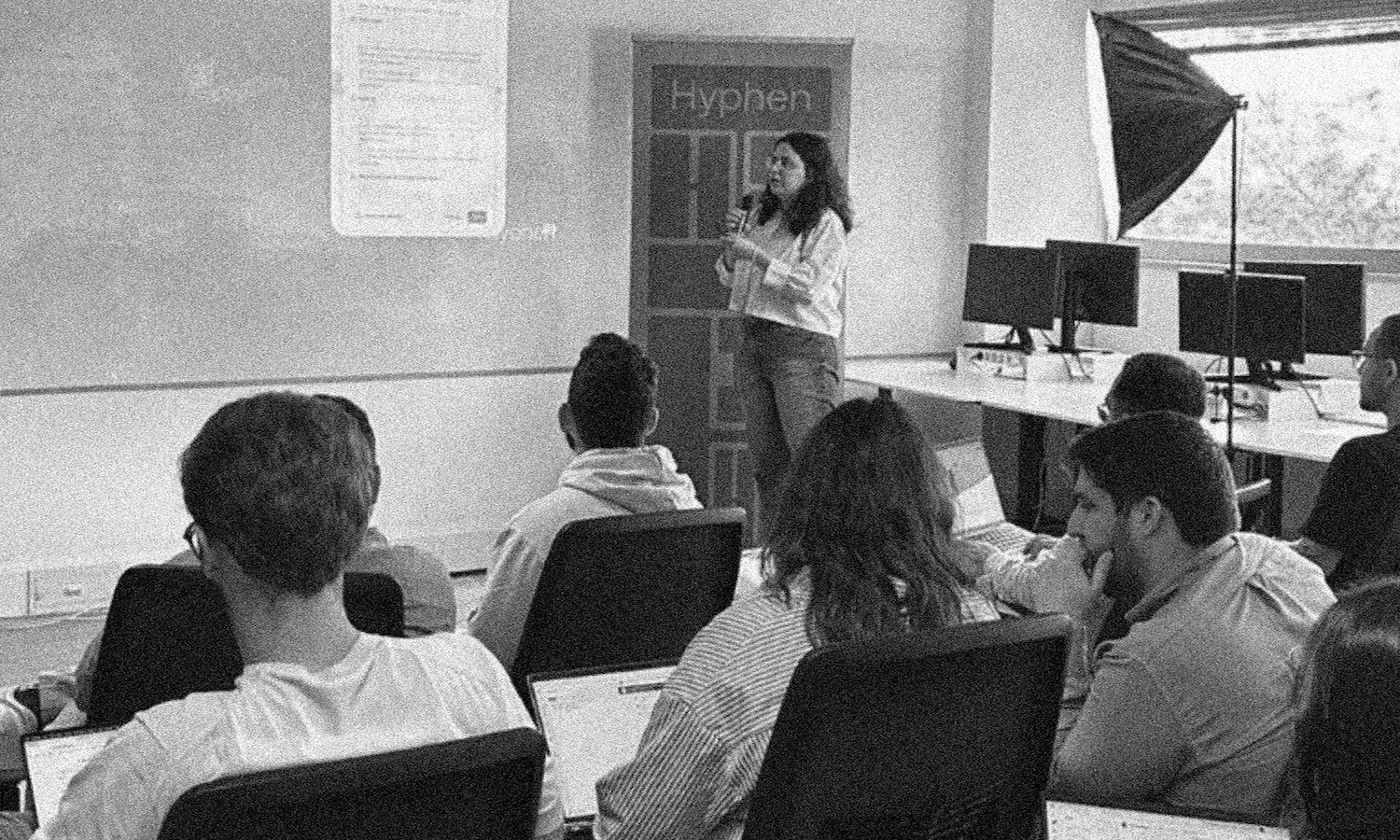
This perspective was the focus of the latest Deep Insights webinar (internal training at Hyphen), led by Hugo Alves, Co-Founder and Chief Product Officer at Synthetic Users.
In the session “Research With Generative AI”, Hugo shared how synthetic users can support product teams by simulating user behaviour, generating early feedback and expanding research capacity without replacing real human insights.
While synthetic users don’t aim to substitute real users, they offer an additional research layer that helps teams learn faster, test ideas earlier, and scale discovery in new ways.
What are synthetic users in UX research?
Teams can use synthetic users across the research lifecycle, especially when timing, access, or complexity make traditional methods difficult.
Key benefits include:
• Structure the problem in the discovery phase
Enabling the exploration of different user types and contexts, supporting the identification of behavioral patterns, and informing hypothesis-driven research that guides early design and strategical decisions.
• Early-stage testing without real users
Teams can test initial flows or concepts before spending time recruiting participants.
• Continuous discovery at scale
Synthetic participants can run multiple scenarios, evaluate copy, or compare design options in minutes.
• Simulating edge cases
AI-generated profiles allow teams to explore behaviours from users who are difficult to recruit or represent low-frequency use cases.
• Faster synthesis
Synthetic users can cluster insights, summarise patterns, or generate draft personas based on analytics and previous research.
• Rapid prototyping and iteration
Designers can test assumptions more often, reducing the gap between ideation and validation.
• Iterations for accessibility
Quickly explore accessibility barriers, test design and content decisions, and assess experiential impact, complementing — not replacing — technical audits and real-user testing.
This makes research more scalable and predictable, especially in environments with fast product cycles or limited access to users.
Where synthetic users add the most value
Synthetic users fit especially well into:
• Discovery
Exploring hypotheses, identifying knowledge gaps, and understanding potential motivations.
• Prototype testing
Running quick tests on wireframes or early flows before usability sessions.
• Journey simulation
Testing how different user types might navigate a product, including unexpected paths.
• Persona generation
Creating dynamic, data-driven personas that update as new insights are added.
• Market exploration
Understanding behavioural trends in new segments or new countries where recruitment would take months.
These use cases reduce uncertainty early on, so teams can use real user sessions for depth instead of basic validation.
Synthetic users vs real participants
Synthetic users offer speed, scale, and convenience, but they don’t replace human insight. Real testing remains essential for emotional nuance, context, and cultural detail. Dimensions AI cannot fully replicate.
A strong research workflow intentionally blends both approaches:
• Synthetic users to provide direction, enable quick iteration, and support early discovery.
• Real users to bring depth, lived experience, and long-term validation.
Used together, they accelerate research cycles while preserving rigor, quality, and human relevance.
Limitations and ethical considerations
Synthetic users are powerful, but teams should approach them with clarity:
• They reflect patterns, not lived experiences.
• They can amplify biases present in their training data.
• They require clear prompts and guardrails to be reliable.
• They should never replace diversity, accessibility testing, or real user interviews.
A human researcher must evaluate outputs, validate assumptions, and ensure the insights support ethical, inclusive design.
Final thoughts: a hybrid future
Synthetic users are becoming a practical layer in UX research. They help teams test more often, explore more directions, and enter real user sessions better prepared.
But the future is not synthetic vs human. It’s about combining the speed of AI with the depth of lived experience — expand exploration, while relying on human insight to interpret, validate, and make decisions.
Teams that integrate both approaches will uncover richer insights and build products that reflect real needs, by reducing blind spots, surfacing early risks, and making research more continuous and inclusive — without replacing the voices of real people.
The shift has already started. And as synthetic users evolve, they will shape a new era of UX research that is not only faster and more intelligent, but also more intentional, accountable, and accessible.