Why Performance Is a UX Feature: Lessons from Server-Side Rendering


Why Performance Is a UX Feature: Lessons from Server-Side Rendering
When discussing user experience, attention is often given to visual design, interaction patterns, and emotional resonance. Yet before any of these elements can be perceived, users encounter something more fundamental: how quickly and reliably the product responds.
Performance is frequently positioned as a technical concern, addressed during development or optimisation phases. In practice, performance plays a central role in shaping user experience. It influences trust, comprehension, and engagement from the very first interaction. Choices such as how and when content is rendered directly affect how users experience a digital product.
Why does performance affect user experience?
Performance affects user experience because users interpret speed as a signal of reliability, clarity, and trust. When meaningful content appears quickly and predictably, users feel confident navigating an interface, even if full interactivity is still loading. This makes perceived performance a core UX concern rather than a purely technical one.
Performance as a Matter of Perception
Users do not experience performance through metrics or benchmarks. They experience it through perception.
An interface that presents meaningful content quickly feels dependable. One that delays visibility, even briefly, can feel uncertain or unresponsive. Two experiences may complete loading in the same amount of time, yet the one that communicates progress and structure earlier will consistently feel faster.
This distinction between actual speed and perceived speed is critical. UX design addresses human expectations, attention, and tolerance for waiting. Performance decisions should support these same principles.
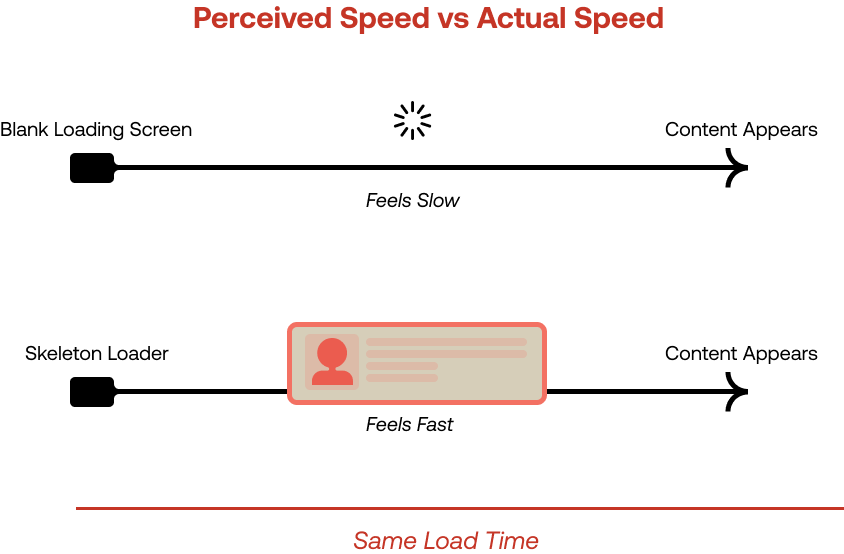
This is why perceived speed is often more important than raw speed. Showing structure, hierarchy, or partial content early reassures users that progress is being made. Many of these patterns align with Google’s performance best practices for improving perceived speed and user confidence.
Rendering Decisions and First Impressions
One of the most influential technical choices affecting perceived performance is how content is rendered and delivered.
In client-side rendered applications, the browser often loads minimal initial content and waits for JavaScript to execute before displaying meaningful information. For users, this can result in blank screens or ambiguous loading indicators.
Server-side rendering changes this dynamic by delivering pre-rendered content immediately. Users can see and begin processing information as soon as the page loads, even before full interactivity is available.
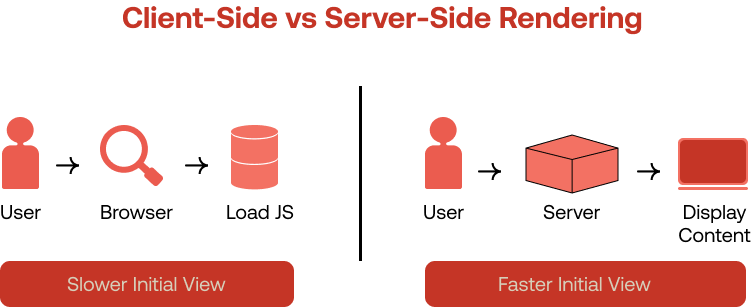
From a UX perspective, early visibility reduces uncertainty. It confirms that the product is functioning, the user has arrived at the correct destination, and progress is underway. These signals are especially important during first-time visits, where trust has not yet been established. Studies and real-world server-side rendering case studies show how early rendering can positively impact engagement and perception.
Performance and User Trust
Trust is a foundational UX principle, and performance contributes to it in subtle but important ways.
Experiences that load predictably and present content early tend to feel more reliable and considered. Users are more likely to remain engaged and explore further when friction is low at the outset.
Conversely, delayed or inconsistent loading can undermine confidence before any meaningful interaction occurs. This is particularly impactful for users arriving via search or shared links, where performance shapes the initial perception of both the product and the organisation behind it.
Rendering strategies that prioritise early content delivery help establish confidence before users take their first action.
Designing for Perceived Speed
Performance is not only about reducing load time. It is also about managing waiting effectively.
Thoughtful loading experiences such as skeleton screens, progressive content rendering, and staged disclosure help users understand what is happening and what to expect next. These patterns provide context and reduce cognitive load during unavoidable delays.

From a UX standpoint, these patterns work because they respect the user’s mental model. Rather than hiding progress behind a spinner, they reveal structure and intent. Achieving this requires alignment between design and implementation, where loading states are intentionally designed rather than treated as an afterthought.
Measuring What Users Experience
UX-led performance measurement focuses on outcomes that reflect real user experience.
Metrics such as Largest Contentful Paint, First Input Delay, and Cumulative Layout Shift are part of Google’s Core Web Vitals, which focus on visibility, responsiveness, and visual stability.
These factors influence how usable and trustworthy an interface feels. When performance metrics are aligned with UX goals, teams are better equipped to make decisions that improve experience rather than optimising in isolation.
Performance as a UX Responsibility
Ultimately, performance is not separate from user experience. It is part of it.
Fast, predictable experiences demonstrate respect for users’ time and attention. They acknowledge real-world conditions such as slow networks, varied devices, and limited focus.
When performance is considered alongside usability, accessibility, and content clarity, it becomes a shared responsibility across design and development.
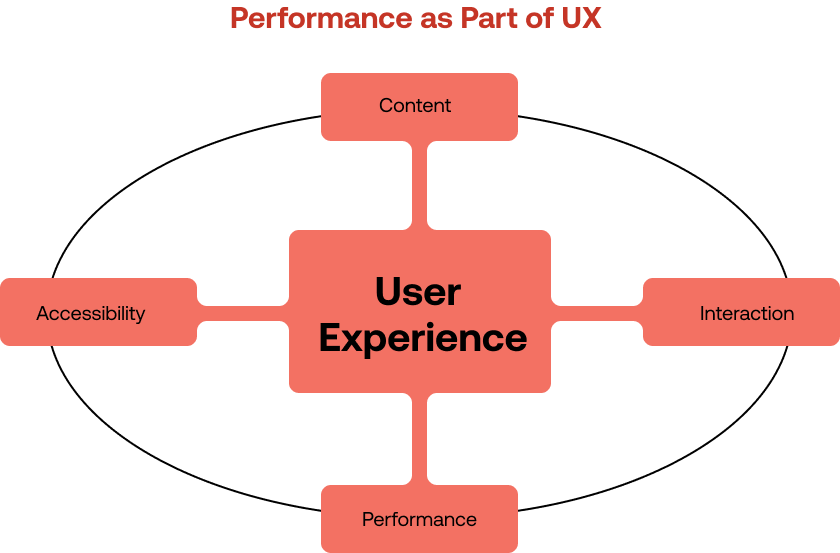
Performance is not simply about how quickly a product loads. It is about how confidentlyand comfortably users can engage with it from the very first moment.




.jpeg)